
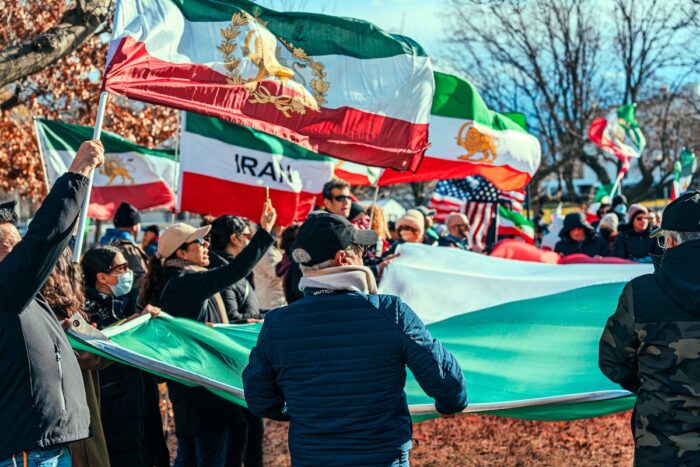
15 January 2025 — The World Refugee & Migration Council is deeply concerned by the sharp increase in casualties following the recent demonstrations in Iran, with activist reports now indicating between 2,500 and 2,600 deaths. The scale of these fatalities, alongside over 18,000 detentions, underscores a critical situation regarding the protection of fundamental rights. We urge a response that aligns with international human rights standards and the preservation of peaceful assembly.
The scale of this violence cannot be separated from the profound humanitarian crisis unfolding across Iran. Millions of Iranian citizens face acute shortages of water and food due to years of systemic mismanagement and environmental degradation. Tehran, a city of 10 million people, stands on the brink of “Day Zero”—the point at which water supplies may become entirely depleted—with drought now in its sixth consecutive year and key water reservoirs at record lows.
Food inflation exceeds 60 percent, and approximately 40 percent of the Iranian population lives near absolute poverty. Hundreds of thousands have been removed from subsidy lists in recent months, forcing families to eliminate proteins, dairy, and essential nutrients from their diets. Many Iranians now lack access to the most basic necessities for survival: clean drinking water and adequate food.
This humanitarian catastrophe is not the result of external factors alone. It reflects decades of catastrophic mismanagement, corruption, and the prioritization of military and repressive apparatus over the well-being of ordinary Iranians. While the regime blames external forces, the truth is that systemic governance failure, environmental mismanagement, and the diversion of resources away from civilian needs have created conditions of mass suffering.
Refugees and internally displaced people in Iran are also facing acute and overlapping humanitarian crises, as millions of Afghans in refugee‑like situations and large numbers of Iranians uprooted by conflict, economic collapse, and a deepening water emergency struggle to meet basic needs. The vast majority of refugees and many IDPs live in overcrowded urban and peri‑urban areas or informal settlements with precarious housing, limited access to clean water and sanitation, and heavy dependence on low‑paid informal work, leaving them extremely vulnerable to inflation, food insecurity, and exploitation. At the same time, increasingly restrictive policies, documentation hurdles, and waves of deportations and forced returns are eroding protection for Afghan refugees, while climate‑driven internal displacement from drought‑stricken rural regions is swelling the ranks of those without stable shelter, livelihoods, or access to essential services.
The international community must move beyond statements of concern. We call for:
Immediate Action by the United Nations: The scale and systematic nature of the violence warrant urgent consideration. The international community should pursue all available mechanisms to document atrocities and create pressure for an immediate cessation of violence.
Targeted Measures Against Regime Leadership: Governments should impose targeted sanctions against senior military and security officials responsible for directing violence against civilians, including commanders of the Islamic Revolutionary Guards Corps (IRGC) and members of the security apparatus. These measures should be coupled with travel bans and asset freezes that signal the international community’s intolerance for mass atrocities.
Documentation and Accountability: The international community must strengthen and support existing UN-mandated accountability efforts. Through the Office of the High Commissioner for Human Rights, including the Independent International Fact-Finding Mission on Iran y Special Rapporteur on human rights in Iran, the UN is actively investigating, monitoring, and documenting serious violations by Iranian authorities. These mechanisms gather testimony, identify patterns of abuse, and report publicly to UN bodies. While not criminal prosecutions, they are essential for preserving evidence, establishing an authoritative record, and enabling future accountability when legal and political conditions allow.
At the same time, the International Criminal Court should immediately launch investigations into alleged crimes against humanity. These investigations must preserve evidence and establish accountability mechanisms for when democratic transition becomes possible.
Support for Democratic Alternatives: We must signal support for a peaceful transition to democratic governance in Iran and a new leadership that respects human rights and the rule of law. This includes providing platforms for Iranian civil society leaders and opposition figures to articulate visions of democratic governance.
The Iranian people have expressed a clear desire for fundamental change, demanding an end to authoritarian rule and the establishment of a government that respects universal human rights principles. A democratic transition is seen as the necessary path forward to restore the rule of law, end the systematic targeting of marginalized groups—including women, minorities, and LGBTQ+ persons—and address urgent environmental and humanitarian crises through transparent governance. Given reports of a catastrophic escalation in state violence, including over 2,500 deaths and widespread arbitrary detentions, there is an urgent need for international accountability and a principled response that upholds the Iranian people’s right to self-determination and basic dignity.
Statement delivered by members of the Council and members of its Task Force Against Global Corruption.
——
El Consejo Mundial para los Refugiados y la Migración seeks to offer bold strategic thinking about how the international community can comprehensively respond to refugees and the forcibly displaced based on the principles of international cooperation and responsibility sharing. Comprising thought leaders, practitioners, and innovators from around the world, and supported by a research advisory network, the Council develops actionable recommendations to transform the global refugee and migration systems through responsibility sharing, accountability, innovative financing, transformative governance, and political will.
Photo: Free Iran Demonstration, Washington, DC, 11 January 2026. © Ted Eytan/Flickr
